
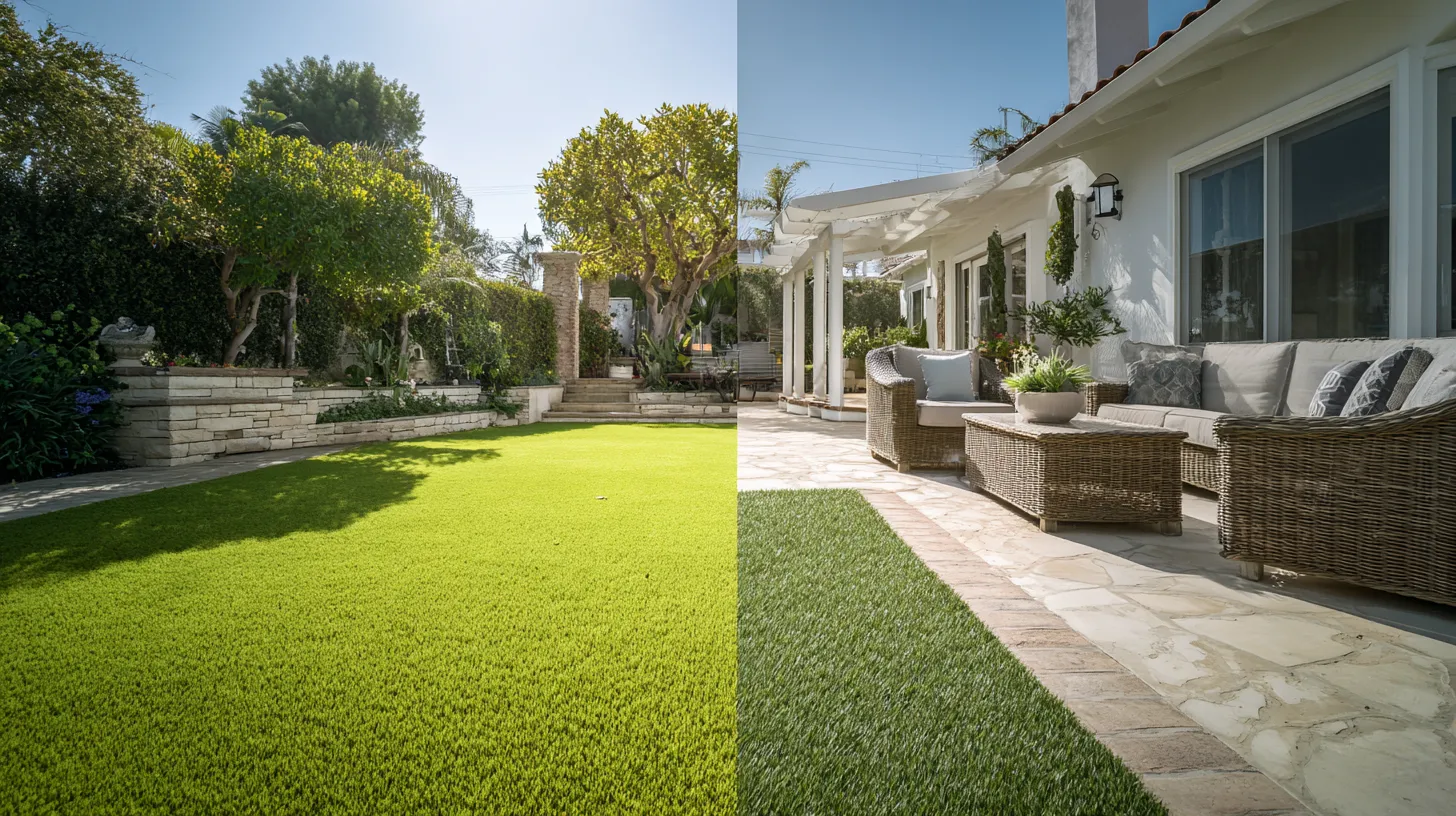
For many Southern California homeowners, choosing between artificial turf and natural grass has become an important landscaping decision. Factors such as water conservation, maintenance costs, durability, curb appeal, and long-term upkeep all play a role when deciding which option works best for a property.
While traditional grass lawns have long been a popular landscaping feature, artificial turf has become an increasingly attractive alternative for homeowners looking to reduce maintenance while maintaining a green and visually appealing outdoor space year-round. Understanding the differences between both options can help homeowners make the right decision for their outdoor environment and lifestyle.
For many Southern California homeowners, choosing between artificial turf and natural grass has become an important landscaping decision. Factors such as water conservation, maintenance costs, durability, curb appeal, and long-term upkeep all play a role when deciding which option works best for a property.
While traditional grass lawns have long been a popular landscaping feature, artificial turf has become an increasingly attractive alternative for homeowners looking to reduce maintenance while maintaining a green and visually appealing outdoor space year-round. Understanding the differences between both options can help homeowners make the right decision for their outdoor environment and lifestyle.
Maintenance Requirements
One of the biggest differences between artificial turf and natural grass is the amount of maintenance required. Natural grass requires regular mowing, watering, fertilizing, edging, and seasonal upkeep to maintain a healthy appearance. In Southern California’s warm climate, maintaining a lush lawn can also become time-consuming and expensive due to irrigation needs and ongoing lawn care.
Artificial turf, on the other hand, offers a significantly lower-maintenance solution. Synthetic grass eliminates the need for mowing and watering while maintaining a clean and green appearance throughout the year. Occasional brushing and cleaning are typically enough to keep artificial turf looking its best.
Water Conservation Benefits
Water conservation has become an important concern for many California homeowners. Traditional grass lawns often require large amounts of water to stay healthy, especially during hotter months and drought conditions.
Artificial turf helps reduce water consumption by eliminating the need for regular irrigation. For homeowners looking to create a more water-efficient landscape, synthetic grass can provide a long-term solution while still maintaining the visual appeal of a natural lawn.
Appearance & Curb Appeal
Both natural grass and artificial turf can create attractive outdoor spaces when properly maintained. Natural grass offers a traditional lawn appearance and natural texture that many homeowners appreciate. However, grass can develop brown spots, uneven growth, and seasonal discoloration if not carefully maintained.
Modern artificial turf products are designed to closely resemble natural grass while maintaining a consistently clean and vibrant appearance year-round. High-quality turf systems can improve curb appeal while reducing the visual inconsistencies commonly associated with natural lawns.
Durability & Everyday Use
Natural grass can become damaged from heavy foot traffic, pets, outdoor activities, and changing weather conditions. Mud, worn patches, and uneven growth are common challenges for active households.
Artificial turf is designed for durability and can withstand regular use while maintaining its appearance over time. Many homeowners choose synthetic grass for pet areas, children’s play spaces, backyard entertainment areas, and outdoor living environments because of its resilience and low-maintenance performance.
Long-Term Costs
While natural grass may initially appear less expensive to install, long-term maintenance costs can add up over time through watering, lawn care equipment, fertilizers, repairs, and ongoing maintenance services.
Artificial turf typically requires a larger upfront investment, but many homeowners find that reduced maintenance expenses and lower water bills help offset the installation cost over the long term. The overall value often depends on the homeowner’s priorities, maintenance preferences, and long-term landscaping goals.
Conclusion
Both artificial turf and natural grass offer unique advantages depending on the needs of the property and homeowner. For homeowners who value a traditional lawn appearance and enjoy lawn maintenance, natural grass may still be a preferred option. However, for those seeking a low-maintenance, water-efficient, and durable landscaping solution, artificial turf has become an increasingly popular choice throughout Southern California.
At QTC Landscape Construction, we help homeowners create customized outdoor spaces designed for long-term beauty, functionality, and everyday enjoyment. Whether you are considering artificial turf installation or planning a complete backyard transformation, our team is here to help you explore the best solution for your property.